×

The Standard e-Paper
Informed Minds Prefer The Standard





Audio By Vocalize
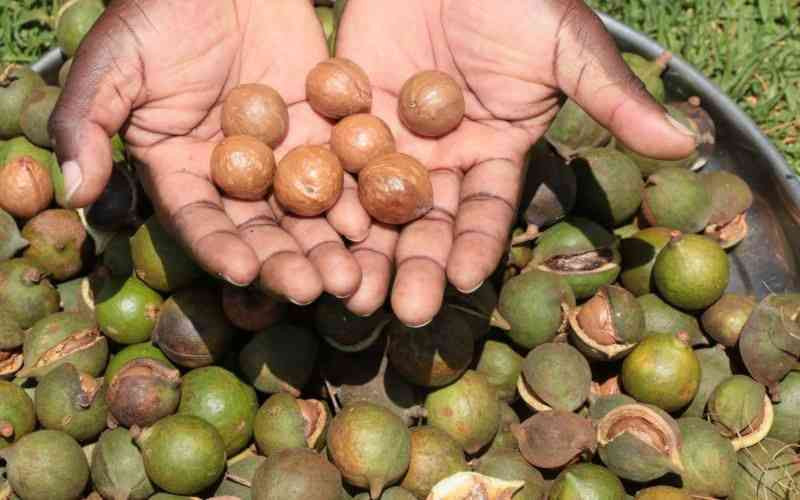
Panic has gripped the Kenyan macadamia sector following reports of intense lobbying by brokers to lift the ban on raw nut exports.
Already, several macadamia processing factories are scaling down operations, and others are shutting down completely as farmers struggle to find buyers for their nuts.
The downturn has exposed deep structural weaknesses in the sector, including premature harvesting, broker dominance, poor crop husbandry, weak farmer organisation, and inconsistent government policies, all of which have undermined investor confidence. Traders say the crisis was worsened by the Agriculture and Food Authority’s (AFA) decision to open the harvesting season on February 1, long before most macadamia nuts had reached maturity.
Industry players argue that the crop normally matures around mid-March and that the early harvesting window encouraged the collection and sale of immature nuts.
In a sector largely controlled by middlemen and lacking formal marketing structures, the consequences were immediate. Within two weeks, brokers had bought up large quantities of nuts directly from farmers, most of them immature.
The influx of poor-quality produce into the market has since damaged Kenya’s reputation among international buyers.
A processor, who requested anonymity due to the sensitive nature of the issue, stated: “The industry is now facing the consequences of harvesting immature nuts.”
“Opening the season too early disrupted the entire value chain and lowered the quality of nuts reaching processors and export markets.”
Industry players are also warning against renewed pressure to allow exports of raw macadamia nuts. According to processors, lifting the export ban could further weaken local factories and hand greater market power to Chinese buyers, who currently dominate the global raw macadamia trade.
China has rapidly expanded its macadamia production and is now producing an estimated 120,000 tonnes annually. Processors fear that Chinese buyers could use their market position to dictate prices while leaving Kenya’s local industry vulnerable.
“We could see a repeat of what happened in 2024,” said Benard Sitati, a member of the Macadamia Association of Kenya (MACNUT).
“Chinese buyers use advanced laser technology to sort nuts according to quality. They buy only the highest-quality nuts and reject the rest. The rejected nuts are then mixed and sold to local processors, leaving Kenyan factories with inferior raw materials.” According to Sitati, the widespread harvesting of immature nuts has significantly damaged Kenya’s standing in premium export markets.
“Some European buyers have fully rejected Kenyan consignments because of quality concerns,” he said.
“Kenya is competing against countries that have strong policies supporting the entire value chain. As our reputation declines, we lose access to premium markets and better prices.”
Although the government introduced a ban on raw nut exports in 2009 to encourage local value addition, stakeholders say policy inconsistency continues to discourage investment in processing.
Macadamia processing requires substantial capital investment, but investors remain hesitant because they are uncertain about future government decisions.
Industry players argue that without predictable policies, traders cannot confidently invest in advanced technologies that would help position Kenyan macadamia products as a premium global brand. Agricultural economist, Prof John Mburu, says the government must treat macadamia as a strategic national crop and develop a long-term industry development plan. More than 200,000 smallholder farmers depend on macadamia production for income. Mburu says these farmers should be organised into producer groups that can improve marketing, training, and access to services.
Subscribe to our newsletter and stay updated on the latest developments and special offers!